
Things to Do in Nouakchott in May
May weather, activities, events & insider tips
Low Season · Budget Friendly
May Weather in Nouakchott
Long-run averages for May
93°F (34°C)
High Temp
69°F (20°C)
Low Temp
0.0 inches (0 mm)
Rainfall
49%
Humidity
11
Sunny-Day UV
⚠ Sustained high UV exposure with minimal natural shade across most of the city. Nouakchott's flat, open terrain and sand-covered surfaces reflect sunlight from below as well as above, effectively doubling your UV exposure compared to shaded or vegetated environments. Sunburn can occur in under 30 minutes of unprotected exposure during peak hours.
⚠ Occasional sand-laden wind gusts reduce visibility and irritate eyes and airways. While May is calmer than the Harmattan-heavy months of January and February, localised dust events still occur without much warning, in the afternoon. Travelers with asthma or respiratory conditions should carry appropriate medication and a face covering.
⚠ Heat-related illness is a genuine risk for travelers unaccustomed to sustained 34°C (93°F) temperatures in a low-shade urban environment. Symptoms of heat exhaustion, including nausea, confusion, and rapid heartbeat, escalate quickly in these conditions. Carry water at all times. Know the location of the nearest clinic to your accommodation.
Is May Right for You?
Weigh the advantages and considerations before booking
Advantages
- + Bone-dry conditions with zero measurable rainfall make every day plannable, and the 49% humidity keeps the 34°C (93°F) heat from feeling tropical or suffocating the way coastal West African cities further south do in May. You will sweat. But it evaporates. That distinction matters more than it sounds.
- + Nouakchott empties of the thin trickle of European visitors who come in the cooler months between November and February, which means the Port de Pêche, the Grand Marché, and the national museum are essentially yours. Accommodation rates tend to drop noticeably, and negotiating becomes easier when demand is slack.
- + May sits in the sweet spot before the Atlantic moisture fully arrives in July and August, so the ocean visibility along Plage de Nouakchott stays clear and the wind patterns are relatively calm compared to the Harmattan-heavy months earlier in the year. Morning walks along the coast are pleasant before the sun climbs.
- + The fishing season is strong in May, and the Port de Pêche operates at full intensity. If watching West Africa's most chaotic open-air fish landing interests you at all, this is one of the best months to see it, with hundreds of painted pirogues beaching in the early hours and the auction in full swing by sunrise.
Considerations
- − The midday heat is punishing. Between roughly 11 AM and 4 PM, outdoor activity becomes an endurance exercise rather than a pleasure. Nouakchott has limited shade infrastructure outside of a few walled compounds and the market corridors, and the sand-and-concrete landscape radiates stored heat well into evening. Plan for a long indoor break or accept that you are going to slow down dramatically in the afternoon.
- − Sand and dust infiltrate everything. May's lighter winds are a relative improvement over January's Harmattan. But Nouakchott sits on the western edge of the Sahara, and fine grit finds its way into camera lenses, luggage zippers, and the corners of your eyes. If you have respiratory sensitivities, this is worth factoring in seriously.
- − Nightlife in the conventional sense does not exist. Mauritania is an Islamic republic where alcohol is officially prohibited, and Nouakchott after dark revolves around tea salons, family gatherings, and the occasional live music performance at a cultural center. If you need a bar scene, this is the wrong city in any month.
Best Activities in May
Top things to do during your visit
Port de Pêche Sunrise Visit
Nouakchott's fishing port is not a quaint harbor. It is a kilometre-long strip of open sand where several hundred brightly painted wooden pirogues beach themselves bow-first each morning, dragged up by crews of six or eight men hauling ropes while the incoming tide pushes from behind. The smell hits you from 200 metres (660 ft) out: raw fish, diesel smoke, salt spray, and the sharp iron tang of blood from the cleaning tables. By 6:30 AM the auction is roaring, with buyers crouching over plastic tubs of corvina, octopus, and thiof while women carry away teetering basins on their heads. In May, the calmer seas mean the pirogues have been out longer and the hauls tend to be larger, so the spectacle runs later into the morning than it does during the windier winter months. Get there before 6 AM to watch the boats come in. By 9 AM the heat and the fish smell become a potent combination, and by 10 AM the serious work is done. Wear shoes you can throw away afterward, because the sand is soaked with fish oil and will never come clean. See current guided options in the booking section below.
Booking Tip: Licensed local guides who know the port's rhythms and can introduce you to the fishermen are worth seeking out. Book at least a week ahead through established operators, and confirm that the tour departs before 6 AM. Afternoon port tours are a waste of time and money. Check the booking widget below for current availability.
Banc d'Arguin National Park Expedition
Roughly 180 km (112 miles) north of Nouakchott, this UNESCO World Heritage coastal wetland is one of the most important bird migration sites on the Atlantic flyway, and May catches the tail end of the northward spring migration. Flamingos, white pelicans, and several species of tern still crowd the shallow lagoons and sandbars in numbers that make you recalibrate what you thought a lot of birds looked like. The Imraguen fishing communities along the shore still use traditional sail-driven methods to herd shoals of mullet, a technique that predates anything you have seen on a nature documentary. This is a multi-day commitment, not a day trip. The road north is paved to a point and then becomes a sand track that requires a capable 4x4 and a driver who knows where the soft patches are. May's dry conditions make the track more navigable than the August rainy season, when sections become impassable. But the heat on the exposed flats is relentless. Bring at least 4 litres (1 gallon) of water per person per day beyond what you think you need.
Booking Tip: This requires a multi-day tour with a reputable outfitter who provides 4x4 transport, camping equipment, and park entry coordination. Book at least two to three weeks ahead, as the logistics are complicated and operator capacity is small. Verify that the operator carries satellite communication equipment. See current expedition options in the booking section below.
Grand Marché and Cinquième Quarter Market Walk
The Grand Marché, also called Marché Capitale, is Nouakchott's commercial heart. It sprawls across covered and semi-covered corridors where the air hangs thick with melting shea butter, crimson pyramids of dried hibiscus, and bolts of indigo fabric so saturated the dye stains your fingers. The adjacent Cinquième quarter spills outward in a looser grid of stalls and workshops. Silversmiths hammer Moorish jewellery. Leather workers stitch camel-hide bags. May's heat dictates the rhythm. By 8 AM the corridors swarm. By noon the metal roofing turns the interior into an oven. Trade slows to a crawl. The sensory overload is real. Tuareg traders spread hand-forged knives and camel saddle blankets on woven mats. Nearby stalls sell Chinese electronics and Senegalese mangoes. The mangoes peak in May. Eat one warm from a stall. The sweetness of a ripe Malian mango is one of Nouakchott's underrated pleasures.
Booking Tip: You do not strictly need a guide for the Grand Marché. Having one who speaks Hassaniya Arabic changes everything. Bargaining becomes possible. Conversation opens up. French alone will not get you there. Arrange a guide through your accommodation. Or use operators listed in the booking widget below. Morning visits between 7 AM and 10 AM are the only sensible window in May. Go early. Go once.
Saharan Dune Excursion East of the City
Nouakchott sits where the Sahara meets the Atlantic. Drive east and the city's low concrete soon yields to rolling dunes. The sand stretches to the horizon. The dunes within 30 km (19 miles) of the city are modest compared to the erg systems deeper inland. They are accessible enough for a half-day trip. They are dramatic enough to feel properly Saharan. Sunrise and sunset transform them. The sand shifts from white to gold to burnt orange. In May, midday sand surface temperatures exceed 60°C (140°F). Bare feet are impossible after 9 AM. The appeal is dawn. The air holds at 22°C (72°F). The light runs low and long. The silence is the specific kind where you hear your own pulse. Camel rides on the dune margins last one to two hours.
Booking Tip: Half-day desert excursions must depart by 5 AM in May. Catch the cool window. Book operators who provide 4x4 transport. They must carry adequate water. Confirm the itinerary includes return before noon. See options in the booking widget below. Do not cut corners.
Nouakchott Cultural Circuit: Museum, Mosque, and Tea Ceremony
The National Museum of Mauritania occupies a modern building near the city centre. It is small enough to absorb in ninety minutes. It is good enough to justify the visit. The pre-Islamic archaeological collection from Aoudaghost and Koumbi Saleh traces the Ghana Empire's trade networks. The ethnographic galleries display Moorish, Soninke, Wolof, and Pulaar material culture with unexpected care. Across the city stands the Grande Mosquée. Saudi funding built it in the 1960s. It is Nouakchott's most recognizable structure. Its minaret rises above most rooftops. Non-Muslim visitors may view the exterior and courtyard. Interior access varies outside prayer times. Ask first. The thread that ties a Nouakchott day together is tea. Ataya, the three-round mint tea ceremony, is not performance. It is how people survive the hottest hours. The first glass is bitter and strong. The second is sweeter. The third is light and foamy. Accepting all three is social contract. The process takes at least forty-five minutes. In May, afternoon heat pins everyone indoors. The tea ceremony is not just tradition. It is survival strategy.
Booking Tip: City cultural tours combining these elements work best as private half-day arrangements. Start early morning. End with tea during midday heat. Book a few days ahead through local operators. Check the booking widget below for guided cultural tour availability. Plan ahead.
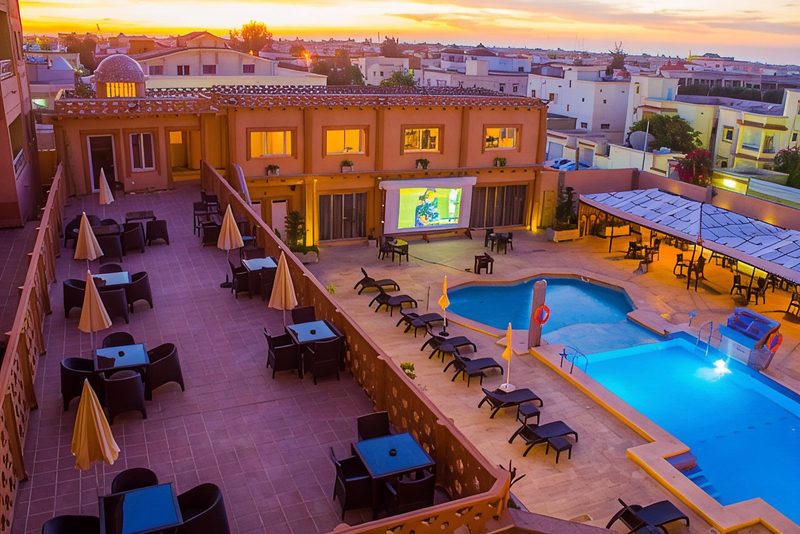
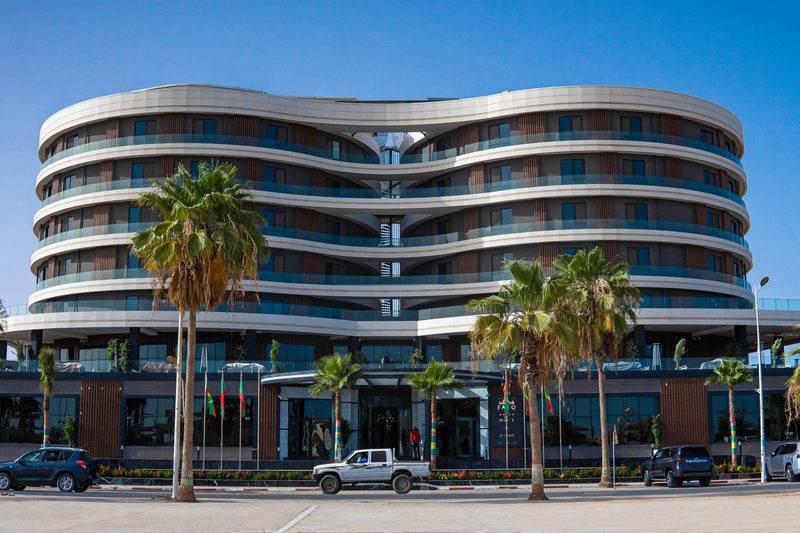
Where to Stay in Nouakchott in May
Hand-picked hotels across price tiers for May travellers.
Public Holidays in May
Dates that affect opening hours, transport and crowds
Labour Day
Observed nationwide as a public holiday.
Africa Day
Observed nationwide as a public holiday.
Labour Day
Observed nationwide as a public holiday.
Africa Day
Observed nationwide as a public holiday.
Packing Checklist
Bookmark this page — your progress is saved between visits
Need the full list with shopping links?
Climate-specific gear, brand recommendations, and what to leave at home.
View Nouakchott Packing List →Essential Tips
Insider knowledge and common pitfalls to avoid
Insider Knowledge
Nouakchott runs on Hassaniya Arabic. French works in hotels and with educated professionals. Market traders, taxi drivers, and fishermen at the Port de Pêche operate almost entirely in Hassaniya. Learn five phrases. Include the drawn-out greeting exchange that Mauritanian social custom requires. It changes your interactions completely. The greeting can take two full minutes of call-and-response about health, family, and wellbeing. Rushing it or skipping it marks you as someone who does not understand how things work here.
The city's taxi system has no meters. Negotiation happens before you get in, not after. In May, with fewer tourists around, drivers may quote lower starting figures than in the winter season. The insider move is learning rough price bands by asking your accommodation staff what a given route should cost. Then negotiate within that range. Overpaying is not generosity. It inflates the market for the next traveler and for locals. Pay fairly.
Nouakchott's safety profile is better than its reputation suggests. The usual rules apply with extra emphasis. Avoid walking alone after dark in unlit areas. Keep valuables out of sight. Know that the beach south of the Port de Pêche has a history of opportunistic theft. The city centre and the Tevragh-Zeina quarter, where most accommodation clusters, are generally calm. The security situation outside Nouakchott, in the eastern and northern border regions, is a different calculation entirely. Consult current advisories before planning overland travel.
Friday is the holy day. Between roughly noon and 3 PM the city shuts down almost completely for Jumu'ah prayers. Markets close. Shops lock. Traffic thins to almost nothing. Do not schedule anything for Friday midday. Friday evening is when Nouakchott's social life peaks. Families gather. Tea is brewed on every corner. The cooler air after sunset brings people out of houses and into the sandy streets. No other evening of the week quite matches it.
Avoid These Mistakes
Avoid scheduling outdoor activities between 11 AM and 4 PM. This is the single most common error visitors make in May. It leads to heat exhaustion. It ruins photographs in washed-out overhead light. It creates a miserable impression of Nouakchott that is entirely self-inflicted. The city comes alive before 8 AM and again after 5 PM. The hours in between are for shade, tea, and rest. The locals have this figured out. Follow their lead.
Do not assume French will get you everywhere. Nouakchott is not Dakar or Abidjan. French is the administrative language. Daily commerce, social interaction, and anything outside the hotel-and-NGO circuit runs on Hassaniya Arabic. Arrive with a few basic phrases or a willingness to use a translation app. Otherwise you are functionally mute in the places that matter most: the markets, the fishing port, the tea salons.
Do not drink insufficient water because the dry heat masks how much fluid you are losing. In Nouakchott's May conditions, with humidity around 49% and temperatures at 34°C (93°F), sweat evaporates so quickly that you rarely feel drenched the way you would in a humid tropical city. This creates a dangerous false sense of security. By the time you notice headache, dizziness, or dark urine, you are already significantly dehydrated. Drink on a schedule, not on thirst. Aim for at least 3 to 4 litres (0.8 to 1.1 gallons) per day.
Ready to plan your trip to Nouakchott?
Now that you've got the research covered, here's where to go next.
Book Experiences in Nouakchott
Top-rated things to do in Nouakchott this May

Explore More Activities in Nouakchott
Didn't see anything interesting yet?
Browse Viator's full catalog of tours, day trips, food experiences, and private guides in Nouakchott.
See All Nouakchott Tours on Viator