

Things to Do in Nouakchott in February
February weather, activities, events & insider tips
Low Season · Budget Friendly
February Weather in Nouakchott
Long-run averages for February
87°F (30°C)
High Temp
61°F (16°C)
Low Temp
0.1 inches (3 mm)
Rainfall
24%
Humidity
8
Sunny-Day UV
⚠ Harmattan dust haze is common throughout February, reducing visibility and coating surfaces with fine Saharan sand. On heavy Harmattan days the sky turns a flat beige and the air tastes gritty. Travelers with asthma or respiratory conditions should carry medication and consider a N95 mask for outdoor excursions.
⚠ The temperature swing between day and night is significant, from 30°C (87°F) to 16°C (61°F), a drop of roughly 14°C (25°F). This catches travelers off guard, in desert areas outside Nouakchott where nighttime temperatures can fall further. Hypothermia is unlikely but genuine discomfort from inadequate evening clothing is very common.
Is February Right for You?
Weigh the advantages and considerations before booking
Advantages
- + February delivers Nouakchott's most comfortable temperatures of the year, with warm days around 30°C (87°F) that lack the punishing 36°C (97°F) heat of September and October, and nights that dip to a cool 16°C (61°F). The dry Saharan air at 24% humidity means your clothes stay dry and the heat feels manageable rather than oppressive. You can spend full mornings outdoors without that wilting exhaustion that defines the humid summer months.
- + Ramadan is expected to fall across most of February 2027, and while that reshapes daily rhythms significantly, it also opens a window into Mauritanian culture that no other month offers. The iftar gatherings after sunset, when the entire city exhales and tables fill with dates, zrig, and communal platters of thieboudienne, are among the most generous and intimate social experiences available to travelers anywhere in West Africa. Families routinely invite strangers to share the meal.
- + Banc d'Arguin National Park, the UNESCO-listed wetland roughly 180 km (112 miles) north of Nouakchott, hits its ornithological peak in February. Migratory wading birds from northern Europe and western Asia overwinter here by the hundreds of thousands, including greater flamingos, white pelicans, and royal terns nesting in colonies so dense they turn the sandbanks pink and white from a distance. The calm Atlantic waters and mild temperatures make boat excursions to the bird islands pleasant rather than the endurance test they become by June.
- + Tourist infrastructure in Nouakchott is sparse in every month, but February's favorable weather coincides with the city's thin high season for the handful of international visitors who come. That means the few experienced local guides and overland operators tend to be active and available, and the informal network of guesthouse owners and fixers who arrange desert excursions is at its most responsive. You are still likely to be the only foreign visitor at the Port de Pêche on any given morning.
Considerations
- − Ramadan in Mauritania is not a suggestion. The country is almost entirely Muslim, and public eating, drinking, or smoking during daylight hours is socially unacceptable and can draw police attention. Most restaurants close entirely until sunset, and the few that serve discreetly to non-Muslim travelers operate behind closed doors with limited menus. If you are not prepared to adjust your eating schedule around sunrise and sunset, February 2027 will feel restrictive in a way that catches first-timers off guard.
- − The Harmattan wind, which blows fine Saharan dust south and west from roughly November through March, tends to be at its most persistent in February. On strong Harmattan days, visibility drops to a couple of kilometres, the sky turns a flat ochre-beige, and a gritty film coats everything. Your throat dries out, your eyes sting, and photography becomes frustrating. The dust is not dangerous for most people. But travelers with asthma or respiratory conditions will notice it.
- − Nouakchott's tourism infrastructure remains limited by any international standard. There is no public transit system, sidewalks are inconsistent to nonexistent, and getting around means negotiating with taxi drivers whose meters, if they exist, are decorative. Road surfaces deteriorate as you move away from the Tevragh-Zeina district, and signage in anything other than Arabic or French is rare. February does not change this. You are visiting a capital city that still feels, in many quarters, like an overgrown Saharan settlement, which is either the appeal or the deterrent depending on your tolerance for improvisation.
Best Activities in February
Top things to do during your visit
Port de Pêche Morning Visits
Nouakchott's fishing port is one of the most extraordinary working waterfronts in Africa, and February's cool mornings make the early arrival not just tolerable but pleasant. By 6:30 AM, hundreds of painted wooden pirogues are already beaching on the sand, their hulls scraping as fishermen haul nets heavy with thiof, sole, and octopus onto the shore. The smell is immediate and unfiltered, salt and fish guts and diesel smoke from the outboard motors, and the noise is a wall of shouting as buyers, mostly women in bright malafas, crowd the catch and haggle in rapid Hassaniya Arabic. The Harmattan haze in February gives the whole scene a soft golden diffusion in the early light that burns off by mid-morning. This is not a sanitized tourist market. Fish are gutted on the sand, donkey carts weave between the crowds, and the scale of it, easily a thousand people on any given morning, makes it feel less like a port and more like a small city that assembles and disassembles daily. Arrive before 7 AM for the peak landing, and plan to spend two hours. By 9:30 AM, the sun starts to bite and the main action has moved inland to the distribution trucks.
Booking Tip: Arrange a French or Hassaniya-speaking guide through your guesthouse at least two days ahead. Going alone is possible but you will miss the social texture entirely, and a local presence smooths the occasional wariness toward cameras. See current guided options in the booking section below.
Banc d'Arguin National Park Birding Expeditions
The Banc d'Arguin, a 12,000 square kilometre (4,633 square mile) mosaic of shallow ocean, mudflats, and desert coastline, is likely the single most compelling reason to visit Mauritania in February. The park shelters the largest concentration of migratory wading birds in the western Palearctic flyway, and February catches the overwintering colonies at full strength before the spring departure north. Greater flamingos wade the shallows in groups that number in the thousands, and the white pelican colonies on the sandbank islands are dense enough to hear, a low collective grunting, before you see them. Imraguen fishermen, the park's indigenous residents, still fish these waters from sailing pirogues using methods that predate the colonial era, and during February's calm seas their boats cross the shallows with a silence that feels deliberate. The park entrance at Iwik sits roughly 270 km (168 miles) north of Nouakchott, and the drive itself crosses flat, featureless Saharan reg before the ocean appears suddenly on your left. An overnight stay near Iwik or Arkeiss is worth the logistical effort. February's clear, dry nights are cool enough for comfortable camping, and the stars above the Atlantic are unobstructed in a way that feels almost aggressive.
Booking Tip: This requires advance planning, at minimum a week ahead. Licensed operators arrange the four-wheel-drive transport, park permits, boat access to the bird islands, and overnight logistics. Solo visits without a guide are technically possible but impractical given the unmarked desert tracks and permit requirements. Check the booking section below for current expedition options.
Adrar Plateau and Chinguetti Desert Excursions
February is one of the two best months for the overland journey to the Adrar Plateau and the ancient caravan city of Chinguetti, roughly 600 km (373 miles) northeast of Nouakchott. Daytime temperatures in the deep desert hover around 28°C (82°F), cool enough to walk comfortably among the sandstone escarpments and through the narrow streets of Chinguetti's old quarter, where medieval manuscript libraries hold hand-copied Qurans and treatises on astronomy that predate the printing press. The sand dunes of Erg Ouarane, which begin just beyond the city, glow a deep copper in the late afternoon light and cool rapidly after sunset to temperatures that make sleeping under canvas comfortable rather than the sweating ordeal of summer. The drive from Nouakchott crosses the Atar pass, a zigzag climb through black rock that opens onto the plateau with a suddenness that still catches you off guard no matter how many times you have done it. During Ramadan, the rhythm of desert travel adapts naturally. Camel handlers and guides break fast at sunset with dates and sweet mint tea around a fire, and the shared meal after a day of fasting has a warmth and slowness to it that tourist dining never replicates.
Booking Tip: Book at least two weeks ahead for multi-day desert excursions. The operator should provide a four-wheel-drive vehicle in good condition, a driver who knows the unmarked desert tracks, camping equipment, and all food and water. Three to four days is the minimum to reach Chinguetti, spend time there, and return without feeling rushed. See current options in the booking section below.
Atlantic Coast Camel Treks
The stretch of coastline south of Nouakchott toward the Senegalese border is flat, wind-scraped Atlantic beach backed by low dunes, and in February the conditions for a half-day or full-day camel trek are about as good as they get. The temperature sits comfortably below the searing highs of late spring, the sand is firm enough near the waterline for steady footing, and the Harmattan haze, while it mutes the horizon, gives the light a quality that feels almost sepia-toned, the camels and their handlers silhouetted against a soft white sky and grey-green surf. These are not tourist camels with padded saddles. The riding style is traditional Moorish, high wooden saddles, and the gait takes twenty minutes to adjust to before your lower back stops protesting. The beach itself is wild in the proper sense: no development, no other people for long stretches, and the Atlantic swells are too rough and unpredictable for swimming, so you ride with the sound of breaking waves on one side and open Sahara on the other. February's low humidity means you do not arrive back drenched in sweat, which is a genuine luxury compared to the humid months.
Booking Tip: Arrange through your accommodation or a locally recommended guide at least three days in advance. Morning departures around 7 AM catch the coolest hours and the best coastal light. Confirm that the operator provides adequate water and that the camels are in good condition. See the booking section below for current options.
Nouakchott Market and Silver Craft Walking Tours
Nouakchott's Marche Capitale, the large commercial heart in the Cinquieme arrondissement, is worth a dedicated half-day even if you buy nothing. The silver section alone is extraordinary: Moorish silversmiths work in narrow stalls surrounded by trays of hand-forged bracelets, pendants, and the elaborate chest ornaments that Mauritanian women wear over their malafas. The smell is charcoal and metal, and the tap of small hammers is constant. In the fabric section, bolts of indigo-dyed bazin, the stiff, glossy cotton that gets its sheen from repeated beating with wooden mallets, are stacked to the ceiling. February's Ramadan timing means the market operates on a compressed schedule, opening later in the morning and closing before the afternoon prayer, then reopening after iftar with a different energy, lantern-lit and sociable rather than transactional. The pre-iftar quiet, around 4 PM when the stalls are half-shuttered and the muezzin's voice carries across the empty lanes, is Nouakchott at its most atmospheric. Temperatures at that hour have dropped enough to make walking comfortable, and the low sun catches the dust in the air.
Booking Tip: A guide who speaks Hassaniya and knows the artisan quarter transforms this from a confusing wander into a genuine education. Arrange at least a day ahead through your accommodation. During Ramadan, plan your visit for mid-morning or the early evening after iftar, when stallholders are most receptive. Check the booking section below for guided cultural tour options.
Iftar Cultural Experiences and Tea Ceremonies
This activity exists only because you are visiting during Ramadan, and it may be the most memorable thing you do in Nouakchott. The Mauritanian tea ceremony, atay, is already one of the most elaborate social rituals in the Sahel, three rounds of increasingly sweet green tea brewed in a small pot and poured from a height to raise a foam, each round carrying its own proverb. During Ramadan, the ceremony takes on an added intensity because it often accompanies the iftar meal, the breaking of the fast. Families gather on mats spread across courtyards or on the sand outside their homes, and the first sip of water and first date after a full day of fasting in the dry heat creates a collective relief that is palpable, you can feel the mood of an entire neighbourhood shift. The food that follows, thieboudienne in the Senegalese-influenced households, couscous with lamb in the Moorish ones, communal bowls of zrig, is eaten by hand from shared platters, and the generosity toward guests, including foreign visitors, is extraordinary and genuine. The experience is not something you can book through a platform. It happens through personal connection, through your guesthouse host, through a guide, through someone you met at the market who invites you home.
Booking Tip: This cannot be booked like a tour. Ask your accommodation host or guide to help an iftar invitation. Be respectful of the fast during daylight hours, dress conservatively, and bring a small gift, dates or fruit, for the host family. The experience is free in the monetary sense but requires genuine social engagement. For structured cultural tours that may include similar experiences, see the booking section below.
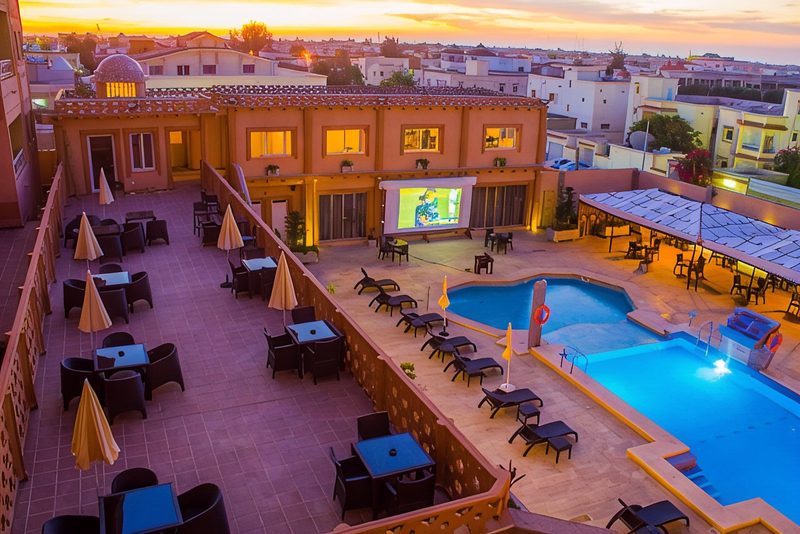
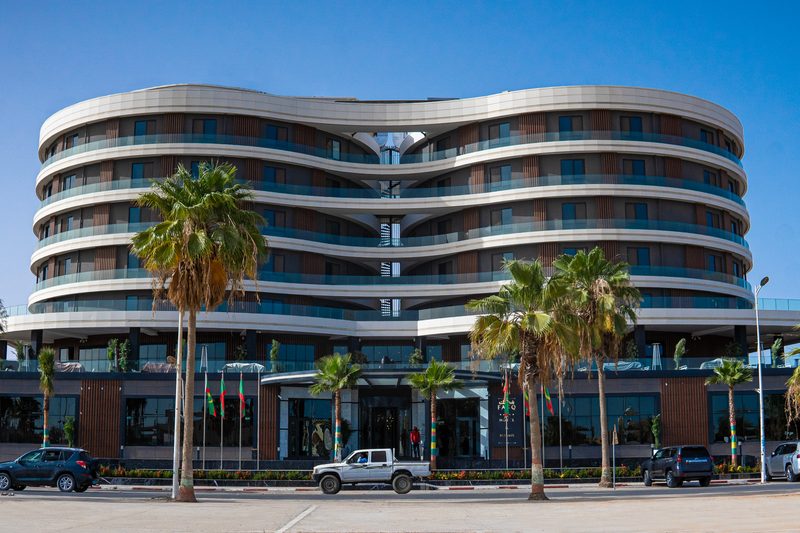
Where to Stay in Nouakchott in February
Hand-picked hotels across price tiers for February travellers.
Packing Checklist
Bookmark this page — your progress is saved between visits
Need the full list with shopping links?
Climate-specific gear, brand recommendations, and what to leave at home.
View Nouakchott Packing List →Essential Tips
Insider knowledge and common pitfalls to avoid
Insider Knowledge
The Mauritanian tea ceremony carries a saying: the first glass is bitter as life, the second strong as love, the third sweet as death. Refusing that third glass is mildly insulting. Set aside twenty minutes minimum when tea is offered, because rushing it signals that you do not value the company. During Ramadan, the ceremony after iftar can stretch past an hour. These unhurried evenings produce the real conversations. Someone offers to take you to a place no guidebook mentions.
Nouakchott's taxi system runs on negotiation, not meters. Before you get in, state your destination and agree on a fare. The price will be higher than what locals pay, and that is fine. But agreeing before the door closes avoids the argument at the other end. Shared taxis along the main routes (the Corniche, Tevragh-Zeina to the Cinquieme) are cheaper and more interesting. A few words of French or Hassaniya go further than any amount of mime.
During Ramadan, a handful of restaurants in the Tevragh-Zeina district serve meals discreetly during daylight hours, typically behind curtained windows or in interior rooms, catering to non-Muslim travelers and foreign workers. Your guesthouse will know which ones are operating. Do not eat, drink, or smoke visibly on the street during fasting hours. This is not a suggestion. It is a genuine social and sometimes legal expectation in Mauritania.
If you are visiting the Port de Pêche, go on a weekday morning rather than Friday. Friday is the main prayer day, and the port's rhythm shifts significantly: fewer boats land, the auction is smaller, and many fishermen are at the mosque. Tuesday and Wednesday mornings tend to see the heaviest catch. Carry small bills for anything you want to buy, because nobody at the port makes change, and the fish you point at will be cleaned and gutted in front of you before you have finished negotiating the price.
Avoid These Mistakes
Assuming restaurants operate on a normal schedule during Ramadan. First-time visitors arrive in Nouakchott in February expecting to grab lunch and find an entire city that is not eating. The adjustment is not difficult, you eat a large breakfast before dawn and a large meal after sunset. But failing to plan for it means going hungry from 6 AM to 7 PM with nothing but bottled water from a dusty corner shop.
Packing for the heat and forgetting the cold. February nights in Nouakchott drop to 16°C (61°F), and in the desert interior they fall further. Travelers who pack only shorts and t-shirts are shivering by 9 PM, if they are sitting outside for an after-iftar tea ceremony with the wind coming off the Sahara. A fleece or light jacket is not optional.
Treating the Atlantic beaches as swimming beaches. The coastline south of Nouakchott looks inviting from the dunes. But the undertow and rip currents are severe and dangerous. There are no lifeguards, no warning flags, and the drop-off is steep. Locals wade but rarely swim. The beach is for walking, camel riding, and watching the fishing boats, not for getting in the water above your knees.
Ready to plan your trip to Nouakchott?
Now that you've got the research covered, here's where to go next.
Book Experiences in Nouakchott
Top-rated things to do in Nouakchott this February

Explore More Activities in Nouakchott
Didn't see anything interesting yet?
Browse Viator's full catalog of tours, day trips, food experiences, and private guides in Nouakchott.
See All Nouakchott Tours on Viator